

I’ve also saved the lives of Jenna Bush, Amy Carter, both Obama girls, and Ron Reagan, Jr.
As you can see, I haven’t been partisan.
These fantasies (yes, none of this really happened) have been a part of my evening ritual for decades. I go to sleep each night imagining myself to be the hero I have always wanted to be. In these scenarios I never knew that the people I was rescuing were public figures. And sometimes, but not always, I would sustain gruesome injuries.
So why did these people falling from burning windows have to be the children of Presidents? Because I figured that only then would I be invited to appear on the Johnny Carson show and be lauded as a hero in front of millions of Americans.
(Never did I consider the fact that Presidents’ children might have had Secret Service Protection and would more likely have been rescued by someone with sunglasses and a gun. That would not have fit well with my design.)
***
I hear people overuse “amazing” so much these days that I could just scream. If everything and everyone is amazing, then nothing is amazing. Let me tell you something: a horsefly can catch a pellet fired from an air rifle. Now, that’s amazing.
Along those lines, the other overused word that gripes me is “hero.”
As I’ve said before, to me a hero is someone who throws himself on a grenade. He risks his life to save another person or, on a larger scale, his family, his community, or his country. And he is selfless. He does it for neither fame nor money.
(Needless to say, a hero doesn’t have to be a man, but I didn’t want to get too mired in pronouns here.)
So if I ever really do catch someone falling from a burning building, would that act fit the definition of heroism? I’d say so, unless before I started my sprint I yelled at an onlooker to film the whole thing so that I’d go viral and end up on Colbert.

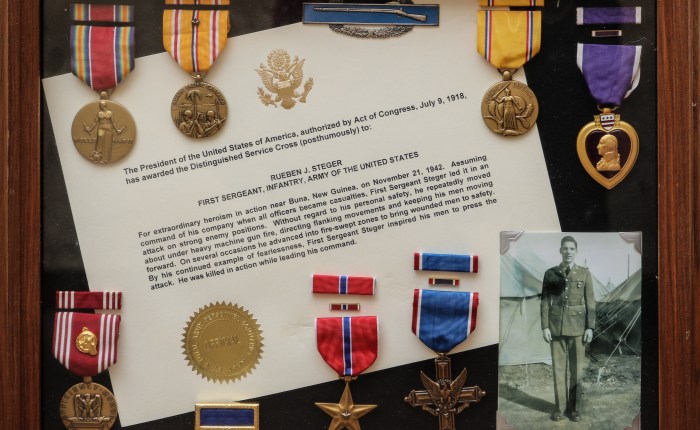
My great-uncle Reuben Steger, whom I discussed at length in “Their Last Full Measure,” was a true hero. He absolutely knew he was going to die at the Battle of Buna in World War II when he saved at least half a dozen lives running through machine gun fire to drag his wounded men to safety. Eventually, on the sixth or seventh foray, his luck ran out. He was 25 years old. The Army gave his parents the Distinguished Service cross he earned for “extraordinary heroism.”

Of course, one needn’t die in order to qualify as a hero. A couple of weeks ago I read a news story about Chief Warrant Officer Joe Rosamond, a helicopter pilot with the CA Army National Guard. Thirty families were trapped at a place called Mammoth Pool in the wilderness, taken by surprise when one of the California fires came raging at them at a savage speed. All ground attempts at reaching the stranded campers had failed. A rescue effort by a CHP helicopter had likewise failed. Another plan had been diverted because the air conditions were so hazardous. Finally the operations commander called off all rescue attempts, but Rosamond was already in his chopper and on the way, not to be dissuaded. He was determined to save those people or die trying, and frankly, there was a good chance he would. He couldn’t make out anything past half a mile, even through his night-vision goggles. By the time he landed on a boat ramp, his own windshield was black with ash and it was impossible to see through it. Then he had to go back twice. Twice. The operation was so harrowing that afterwards he would liken it to his missions in Iraq and Afghanistan. He saved 214 people.

And what about Harriet Tubman, the brutally-beaten slave who escaped and made 19 return missions to rescue dozens of slaves using the Underground Railroad, each time putting herself willingly in grave danger? Had she been detected, she would have been drawn and quartered.

Or the unbelievably courageous divers in 2018 who rescued 12 young boys and their coach from a cave in Thailand. The undertaking was physically treacherous and mentally terrifying. All of the kids, and their coach, survived. But one of the divers, Saman Kunan, died of asphyxiation in the cave. (Another one, by the way, died 10 months ago from a blood condition he contracted during the rescue.)

Or Amy O’Sullivan, who made Time’s list of 100 influential people last month. A long-time ER nurse, she helped care for the first COVID-19 patient at Brooklyn’s Wyckoff hospital. A short time later, she came down with the disease herself and spent four days intubated, hooked up to a ventilator. After two weeks she went back to work.
***

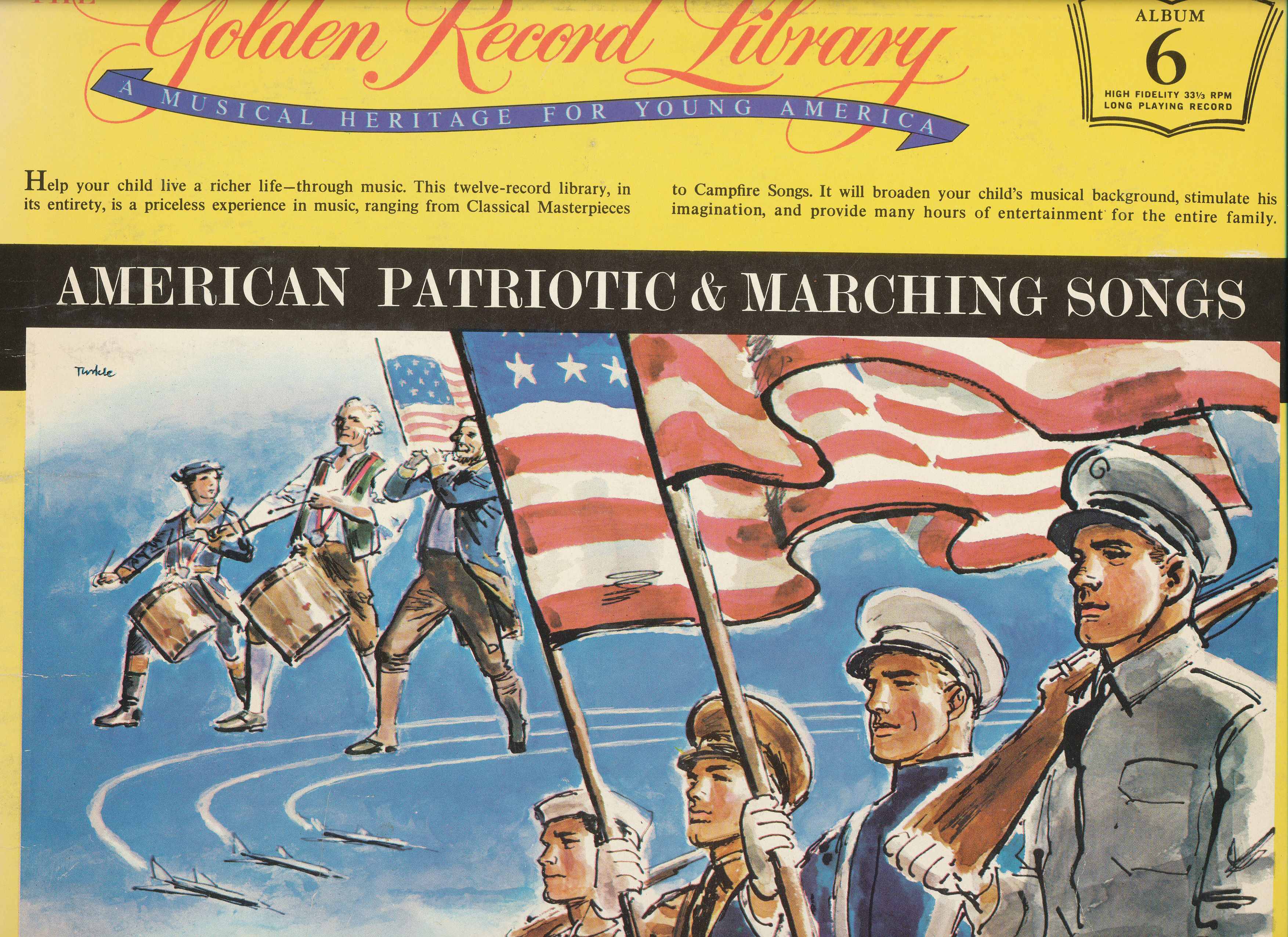
When we were very young, my siblings and I had an album called America on the Move. It was part of the 1959 multi-LP set “The Golden Library,” which featured collections of patriotic tunes, songs about faith, nursery rhymes, and other music. One of our favorite songs from the album was “Casey Jones,” about the railroad engineer who gave his life for his passengers on his “farewell trip to the Promised Land.” I actually have a one-minute recording of the Bocciardi kids singing this tune in 1962:

Jones, a railroad engineer, died in 1900 at the young age of 37. On his last run, with six cars of passengers, the train was heading out of a blind curve when the engine’s fireman spotted a freight train parked on the track ahead. It was too late for Jones to stop, and he knew it. After yelling at the fireman to jump, Casey stayed aboard, blowing his whistle and braking the train as it went crashing through four of the freight train’s cars before leaving the track. He spent his last moments on earth mitigating the potential effect of the collision on those for whom he had responsibility. All of the passengers (and the fireman) survived. Casey did not. The story goes that his body was found with his hand still clutching the whistle and the brake. He was a true hero.
***
But what about those who display extraordinary selflessness without risking their lives?
I’d like to call attention to one of my favorite ballplayers: Buster Posey, the storied catcher for the San Francisco Giants.
Sure, he has potential Hall of Fame stats, is a six-time All-Star, won the NL Rookie of the Year award in 2010, and was the National League MVP in 2012. But he’s not a “hero” to me. I think it’s ridiculous that we so commonly apply that label to athletes who hit baseballs or sink baskets or score touchdowns while playing a game they love and pulling in more money annually than most of us will ever see cumulatively in our lifetimes.
But there’s something special about him that I recognized when he first came up with the Giants. He went about his business quietly. He wasn’t a showboat. His teammates immediately looked up to him. I’d say that he’s been a steadfast role model.
But this season he proved to be much more than that.
Just a few days into the summer preseason, Buster had just finalized the adoption of twin premature baby girls and had been told that after spending at least four weeks in neonatal intensive care, the babies would have vulnerable immune systems for a number of months. He reported to camp for a day or two but was visibly tortured. After talking to doctors, he made a decision that was personally excruciating but, for him, clear-cut.
He opted out of the 2020 baseball season altogether.
“These babies being as fragile as they are for the next four months, at minimum, this ultimately wasn’t that difficult a decision for me,” he said. “From a baseball standpoint, it was a tough decision. From a family standpoint and feeling like I’m making a decision to protect our children, I think it was relatively easy.
“My wife, I, and our other children are just overwhelmed with joy to welcome them into our family to love them unconditionally and just share life with them.”
Buster and his wife Kristen gave up $8 million when they made this choice.
Now, let’s face it, that’s a drop in the bucket for them and will make no difference in the quality of their lives whatsoever.
But Posey also gave up a season of, for him, just a few dwindling seasons left. He is 33 years old, and for a catcher, that means he’s nearing the end of his playing career. After a lackluster 2019 as a result of postsurgical difficulties, he’d been absolutely tearing up the first Spring Training in early 2020, hitting a whopping .455. This had the potential to be a dominating year for him – perhaps his last. Yet he opted out. For most professional athletes, that would be tantamount to torture.
The most noble among us, though, are willing to devote ourselves to causes well beyond our own self-interest. To country, or community, or family. Buster and his wife have been struggling to adopt – which in and of itself is a selfless act – ever since they had biological twins in 2011. But meanwhile they have been devoting their energies to the Buster and Kristin Posey Fund, which is dedicated to battling pediatric cancer through awareness and research.
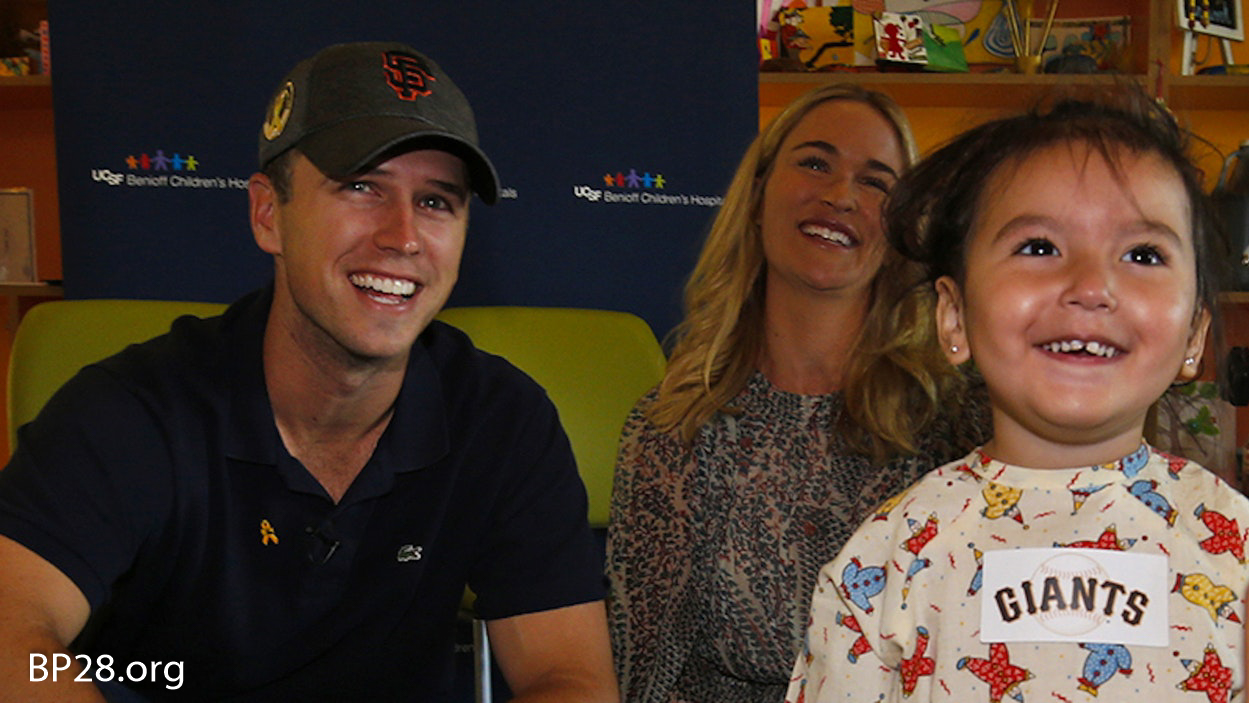
“It’s not acceptable,” Buster once said about childhood cancer. “We can’t sit here and talk about how bad this is, we’ve got to try to help.”
To whom much is given, much will be required.
Buster has given back in abundance. Not just talk, but action. Not just money, but time. He’s what a man – especially a man of means – ought to be.
He has character.
So I want another category. I want a category for people who make personal sacrifices for others, even though those sacrifices might not involve life and death.
I’ve decided to use “lodestar.”
Buster Posey is my lodestar. Add that to his legacy.
So as I sit here today on this metaphorical pier, at the edge of the Pacific, while the country rocks and swells and stumbles darkly behind me, I think of all the lodestars still lighting our way. I think of all the great men and women who silently, and without acclaim, provide reason, patience, calm, truth, integrity, and sacrifice.
Ever the optimist, I believe that, with time, they will help bring us back to our once-noble home.

Due to popular demand, I am including, at the end of each blog post, the latest random diary entries that I’ve been posting on Facebook for “Throwback Thursday.” These are all taken absolutely verbatim from the lengthy diaries I kept between 1970 and 1987.
9/20/72 [age 16]:
“Oh, I am so excited by the prospects of learning. All the books I’ve gotten – they all are filled with so much wonderful new information that I want to read very word and to keep them forever. I don’t like the early hours of college; in fact, I have to pick Robin up at 6:45 tomorrow because she has to get there especially early. I don’t like my lack of sleep. And of course my laziness makes me extremely adverse [sic] to studying, or any kind of work. But the bright promise of learning – I think it is worth everything.”
9/21/72 [age 16]:
“I wonder if I am the only near-17-year-old in the entire world who has had such a meager love life. I am so-o-o-o lonely for real companionship. I don’t think there is any guy I really like right now, and I may never have the chance to. I am young, have a weird voice, and am far from good-looking. In fact, I’m not sexy at all, and I suppose I suffer from lack of feminism [sic]. My face . . . oh, yecch.”
9/27/72, ONE WEEK after starting college [age 16]:
“Boy, I’m so tired! College requires such a large amount of reading – I get headaches every day now. Between tons of homework and my daily Bible reading (which takes quite a bit of time) and my daily letters and baths and hairwashings and homework, I never have time for FUN anymore!”
10/4/72 [age 16]:
“At dinner tonight, Dad told me that my dear beloved [former high school teacher] Mr. Bernert told him that whenever he hears that ridiculous song ‘I’m the Happiest Girl in the Whole USA’ by Donna Fargo, he thinks of ME. I’m still trying to figure out what he could possibly mean.”
10/4/72 [age 16]:
“Our first biology field trip today was to Alum Rock Park [in San Jose]. I enjoyed it, because, besides the fact that I am in love with Dr. Shellhammer, the teacher, I now have a far greater ecological appreciation for the Park. And to think I used to call it a dumb place . . .”
10/5/72 [age 16]:
“I had the ‘tremendous’ privilege of seeing the Vice-Presidential candidate Sargent Shriver today at [San Jose State]. I was with Mary Pasek, and I almost fainted. Why? Because 1) it was very hot and I had on a sweater OVER a jumper, 2) there were 4000 people there, 3) I hadn’t had lunch at all, and 4) I suppose he wasn’t too thrilling for me to listen to.”
10/14/72 [age 16]:
“Since Sue came home this weekend I took her and Barb to Baskin’s and Robbin’s tonight. Night driving scares me. Then we came to our house and talked. I loved it. Sue is religious now, very into the Bible, and she is exceedingly happy, just in the way she talks it shows. We talked of religion, mostly, and once more I felt warmed over with love for humanity. Mom laughed at the whole affair, saying, ‘You feel obligated to be worldly. Why can’t you talk about fishing, like boys do?’ ”
10/16/72 [age 16]:
“It was strange, but Mrs. Espinosa called today (you know, the school nurse who I went skiing with) just to see how I was. It was really nice. The thing is – I honestly keep wondering to myself how anyone could LIKE me, let alone care enough about me to call. I mean, I’m such a quiet, sullen, moody, morose person.”
10/18/72 [age 16]:
“Our Biology field trip today was to Villa Montalvo, and Dr. Shellhammer walks so fast that the rest of us have to jog. But I did so willingly; I have developed a passionate love for running. I first saw that in the movie ‘Tribes,’ where the guy claimed that he could do any physical feat by putting ‘mind over matter,’ and I then thought it was a bunch of bull, but now I really believe it. When I am running, I can daydream – as long as I am not running uphill, where concentration is required.”
10/25/82 [age 16]:
“I got my second English paper back today with a B- on it. I have always taken great pride in my writing. It would not be too bad if Dr. Haeger’s comments were justifiable, but I disagree with 95% of them. I like my word choice better. Also, I certainly am not going to change my style. The fragments, dots, dashes, etc. that I use are not accidental grammatical errors; they are techniques I use on purpose to contribute to the effect of the paper. Hmmm. Last week I claimed that I had no interest in grades. Perhaps I should rescind that.”
10/27/72 [age 16]:
“I was thinking about [San Jose] State today, how I love it but I hate it. It’s far too big. There are so many people that I’m forced to be alone, solitary in the midst of others. Is that understandable? There is no chance to cultivate any close friendships, or really get to know anyone. We have 25,000 students! I spoke with Yolanda Parra today and she seemed so open and loving. But she gave me a blank stare when I mentioned my ‘there are so many people that I feel all alone’ theory. I’m beginning to wonder if I’m a ding-a-ling.”
10/28/72 [age 16]:
“[My friend] Judy came over today at 12:30 and we worked on her essay on busing for 4 hours. Actually, I wrote the whole thing – just dictated while she wrote it down. I’m glad I could help, but – what do I know about busing??!”
10/29/72 [age 16]:
“Tonight I asked Robin over to watch ‘Yellow Submarine’ and a Peanuts special, where my beloved Linus won an election! I love him – he’s so cute and kind and wise and intellectual. He’s my man.”
12/5/72 [age 17]:
“Barb and I rode up and down the elevators at Duncan Hall yesterday. We had just eaten an entire bag of too-salty cornnuts on empty stomachs. Then these elevators – in Duncan Hall they’re so FAST that your stomach exits. We got in two separate elevators on floor 6 and rode up and down trying to find each other. Eventually we did, but only after I’d gotten a million drinks of water on a million different floors . . . plus the cornnuts, plus the elevators – Barb and I were so nauseated. We each went home, took two aspirin, and went to bed.”
12/11/72 [age 17]:
“Gadzooks! Robin has decided to have a wild party sometime during Christmas vacation. I guess it’ll have all the vices, bar none. For some totally absurd reason I would love to go, so that I could at least know that I have been in a tempting environment and have resisted it.”
12/12/72 [age 17]:
“I have almost resigned myself to the notion that there is no possibility of my ever becoming lucky enough to fall in love. And how can I live my life alone? True, I am young, but I see future repetitions of my present daily, weekly, monthly, yearly pattern. It’s almost unbearably depressing, yet I remain clinging to the hope that perhaps someday I will stumble miraculously upon him. In the meantime, I sit and wait . . . and cry every once in a while.”
12/19/72 [age 17]:
“I’m still worried about Law Enforcement and if I will indeed remain with it. There are so many things I want do to: be a psychologist, work with the physically handicapped, read to old people, get people off drugs, write, be a cop. And I don’t think that I could do everything at once. And the thing that I would really like to do, above all else, is to move out and go to college for 50 years. Of course, I’d have to have a part-time job on the side.”
12/23/72 [age 17]:
“Another rotten day. Both the 49ers and the Raiders lost by way of flukes in the last few seconds. Pittsburgh caught a deflected pass near the ground and ran a touchdown in the last 5 seconds to be victors over the Raiders. And the stupid Cowboys scored two touchdowns in the last 2 minutes to wrest victory from the deserving hands of San Francisco. The only good thing was [my cousin] Ronnie’s appearance. I love just looking at him – he’s so cute and now he has a moustache. A pleasing sight is no substitute for sweet victory, however.”
12/25/72 [age 17]:
“About all I do up here [in southern CA at my grandparents’ house] is listen to music. [My uncle] Fred brought over his two-record set of Neil Diamond’s live concert at the Greek theater (which he and [my aunt] Jackie witnessed) called ‘Hot August Night.’ It’s an eight-dollar record! While I listen to that I’m writing an entry for my journal about the past year called ‘Shades of 1972 Revisited,’ which is so lengthy I may never finish. Otherwise, I’m wearing the grooves out of ‘Sounds of Silence’ and ‘Songs for Beginners.’ I don’t write while I listen to those because I love them so much that I need to listen intently.”
1/5/73 [age 17]:
“Once again, for the jillionth time, I feel terribly guilty. [My friend] Robin has decided to move out tomorrow – has even informed her parents – and I didn’t discourage her in the least. I feel as if I’ve contributed to the ruination of a young person’s life. She doesn’t have much money, and her parents will be hurt. Will Robin regret it forever? Will she go off the deep end, as I believe she already has? (I heard rumors, partly verified, that at her party she gave a couple of weeks ago there was a lot of ‘making out.’)”
1/6/73 [age 17]:
“It was once again brought to my attention today that as far as practical knowledge and skills go, I am a total failure. My complete uselessness in the household infuriates Mom to high degrees. But I need not know how to cook exotic things for myself, because I can easily subsist on hamburgers and root beer.”
1/8/73 [age 17]:
“Our tennis class was cancelled today so Barb and I took the bus (a first for me!) to her house where I had rice and egg fu yung and won ton soup. Wow, what a lunch! Her parents were astounded at my universal appreciation of food.”
1/12/73 [age 17]:
“We came up to Clearlake today and I’m freezing to death. One small fire and an inadequate heater cannot warm my perpetually shivering body with their meager warmth. Small things make me happy, though. They bought us a colossal bag of sunflower seeds, which makes my studying much more enjoyable.”
2/1/73 [age 17]:
“My constant praying has paid off. The wait in line outside from 6:00 to 10:00 to register for this semester was not too bad. I had on long underwear (with no bra – it felt weird), my yellow sweatshirt, Levis, and my blue jacket. The only parts of me that got cold in this freezing weather were my feet – they turned numb. I was number 83 in line and got all the classes I wanted AND the sections I wanted! (except tennis, so I took badminton) God is a great guy, but today he was exceptionally terrific.”





 Monday Morning Rail